



-->
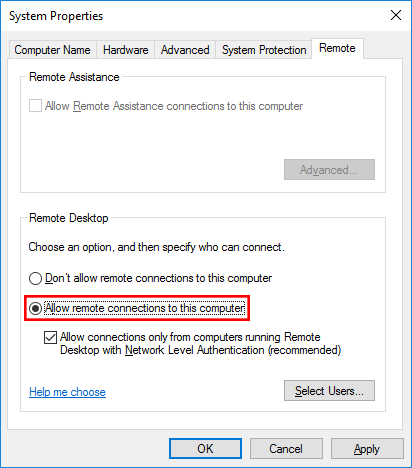
See full list on docs.microsoft.com. In this video, Scott Burrell configures Windows Server 2016 to act as a Remote Access VPN server. The role is changed from NAT to a combination of NAT and VPN, and configured to allow authorized. Mar 21, 2016 To enable multiple remote desktop connections in Windows Server 2012 or Windows Server 2016, you’ll need to access the server directly or through Remote Desktop. Once you’ve logged in, press the Windows key in Windows Server 2012 to open the Start screen or simply type the following into the Start bar in Windows Server 2016: gpedit.msc.
Applies to: Windows Server 2019, Windows Server 2016, Windows Server 2012 R2, Windows Server 2012
This topic supports Remote Server Administration Tools for Windows 10.
Important
Starting with Windows 10 October 2018 Update, RSAT is included as a set of Features on Demand in Windows 10 itself. See When to use which RSAT version below for installation instructions.
RSAT lets IT admins manage Windows Server roles and features from a Windows 10 PC.
Remote Server Administration Tools includes Server Manager, Microsoft Management Console (mmc) snap-ins, consoles, Windows PowerShell cmdlets and providers, and some command-line tools for managing roles and features that run on Windows Server.
Remote Server Administration Tools includes Windows PowerShell cmdlet modules that can be used to manage roles and features that are running on Remote servers. Although Windows PowerShell remote management is enabled by default on Windows Server 2016, it is not enabled by default on Windows 10. To run cmdlets that are part of Remote Server Administration Tools against a Remote server, run Enable-PSremoting in a Windows PowerShell session that has been opened with elevated user rights (that is, Run as Administrator) on your Windows client computer after installing Remote Server Administration Tools.
Remote Server Administration Tools for Windows 10
Use Remote Server Administration Tools for Windows 10 to manage specific technologies on computers that are running Windows Server 2019, Windows Server 2016, Windows Server 2012 R2, and in limited cases, Windows Server 2012 , or Windows Server 2008 R2 .
Remote Server Administration Tools for Windows 10 includes support for remote management of computers that are running the Server Core installation option or the Minimal Server Interface configuration of Windows Server 2016, Windows Server 2012 R2 , and in limited cases, the Server Core installation options of Windows Server 2012. However, Remote Server Administration Tools for Windows 10 cannot be installed on any versions of the Windows Server operating system.
Tools available in this release
For a list of the tools available in Remote Server Administration Tools for Windows 10, see the table in Remote Server Administration Tools (RSAT) for Windows operating systems.
System requirements
Remote Server Administration Tools for Windows 10 can be installed only on computers that are running Windows 10. Remote Server Administration Tools cannot be installed on computers that are running Windows RT 8.1, or other system-on-chip devices.
Remote Server Administration Tools for Windows 10 runs on both x86-based and x64-based editions of Windows 10.
Important
Remote Server Administration Tools for Windows 10 should not be installed on a computer that is running administration tools packs for Windows 8.1, Windows 8, Windows Server 2008 R2, Windows Server 2008, Windows Server 2003 or Windows 2000 Server. Remove all older versions of Administration Tools Pack or Remote Server Administration Tools, including earlier prerelease versions, and releases of the tools for different languages or locales from the computer before you install Remote Server Administration Tools for Windows 10.
To use this release of Server Manager to access and manage Remote servers that are running Windows Server 2012 R2 , Windows Server 2012 , or Windows Server 2008 R2 , you must install several updates to make the older Windows Server operating systems manageable by using Server Manager. For detailed information about how to prepare Windows Server 2012 R2, Windows Server 2012, and Windows Server 2008 R2 for management by using Server Manager in Remote Server Administration Tools for Windows 10, see Manage Multiple, Remote Servers with Server Manager.
Windows PowerShell and Server Manager remote management must be enabled on remote servers to manage them by using tools that are part of Remote Server Administration Tools for Windows 10. Remote management is enabled by default on servers that are running Windows Server 2016, Windows Server 2012 R2, and Windows Server 2012. For more information about how to enable remote management if it has been disabled, see Manage multiple, remote servers with Server Manager.
Install, uninstall and turn off/on RSAT tools
Use Features on Demand (FoD) to install specific RSAT tools on Windows 10 October 2018 Update, or later.
Starting with Windows 10 October 2018 Update, RSAT is included as a set of Features on Demand right from Windows 10. Now, instead of downloading an RSAT package you can just go to Manage optional features in Settings and click Add a feature to see the list of available RSAT tools. Select and install the specific RSAT tools you need. To see installation progress, click the Back button to view status on the Manage optional features page.
See the list of RSAT tools available via Features on Demand. In addition to installing via the graphical Settings app, you can also install specific RSAT tools via command line or automation using DISM /Add-Capability.
One benefit of Features on Demand is that installed features persist across Windows 10 version upgrades.
To uninstall specific RSAT tools on Windows 10 October 2018 Update or later (after installing with FoD)
On Windows 10, open the Settings app, go to Manage optional features, select and uninstall the specific RSAT tools you wish to remove. Note that in some cases, you will need to manually uninstall dependencies. Specifically, if RSAT tool A is needed by RSAT tool B, then choosing to uninstall RSAT tool A will fail if RSAT tool B is still installed. In this case, uninstall RSAT tool B first, and then uninstall RSAT tool A. Also note that in some cases, uninstalling an RSAT tool may appear to succeed even though the tool is still installed. In this case, restarting the PC will complete the removal of the tool.
See the list of RSAT tools including dependencies. In addition to uninstalling via the graphical Settings app, you can also uninstall specific RSAT tools via command line or automation using DISM /Remove-Capability.
When to use which RSAT version
If you have a version of Windows 10 prior to the October 2018 Update (1809), you will not be able to use Features on Demand. You will need to download and install the RSAT package.
Install RSAT FODs directly from Windows 10, as outlined above:When installing on Windows 10 October 2018 Update (1809) or later, for managing Windows Server 2019 or previous versions.
Download and install WS_1803 RSAT package, as outlined below:When installing on Windows 10 April 2018 Update (1803) or earlier, for managing Windows Server, version 1803 or Windows Server, version 1709.
Download and install WS2016 RSAT package, as outlined below:When installing on Windows 10 April 2018 Update (1803) or earlier, for managing Windows Server 2016 or previous versions.
Download the RSAT package to install Remote Server Administration Tools for Windows 10
Download the Remote Server Administration Tools for Windows 10 package from the Microsoft Download Center. You can either run the installer from the Download Center website, or save the download package to a local computer or share.
Important
You can only install Remote Server Administration Tools for Windows 10 on computers that are running Windows 10. Remote Server Administration Tools cannot be installed on computers that are running Windows RT 8.1 or other system-on-chip devices.
If you save the download package to a local computer or share, double-click the installer program, WindowsTH-KB2693643-x64.msu or WindowsTH-KB2693643-x86.msu, depending on the architecture of the computer on which you want to install the tools.
When you are prompted by the Windows Update Standalone Installer dialog box to install the update, click Yes.
Read and accept the license terms. Click I accept.
Installation requires a few minutes to finish.
To uninstall Remote Server Administration Tools for Windows 10 after RSAT package install)
On the desktop, click Start, click All Apps, click Windows System, and then click Control Panel.
Under Programs, click Uninstall a program.
Click View installed updates.
Right-click Update for Microsoft Windows (KB2693643), and then click Uninstall.
When you are asked if you are sure you want to uninstall the update, click Yes.S
To turn off specific tools (after RSAT package install)
On the desktop, click Start, click All Apps, click Windows System, and then click Control Panel.
Click Programs, and then in Programs and Features click Turn Windows features on or off.
In the Windows Features dialog box, expand Remote Server Administration Tools, and then expand either Role Administration Tools or Feature Administration Tools.
Clear the check boxes for any tools that you want to turn off.
Note
If you turn off Server Manager, the computer must be restarted, and tools that were accessible from the Tools menu of Server Manager must be opened from the Administrative Tools folder.
When you are finished turning off tools that you do not want to use, click OK.
Run Remote Server Administration Tools
Note
After installing Remote Server Administration Tools for Windows 10, the Administrative Tools folder is displayed on the Start menu. You can access the tools from the following locations.
- The Tools menu in the Server Manager console.
- Control PanelSystem and SecurityAdministrative Tools.
- A shortcut saved to the desktop from the Administrative Tools folder (to do this, right click the Control PanelSystem and SecurityAdministrative Tools link, and then click Create Shortcut).
The tools installed as part of Remote Server Administration Tools for Windows 10 cannot be used to manage the local client computer. Regardless of the tool you run, you must specify a remote server, or multiple remote servers, on which to run the tool. Because most tools are integrated with Server Manager, you add remote servers that you want to manage to the Server Manager server pool before managing the server by using the tools in the Tools menu. For more information about how to add servers to your server pool, and create custom groups of servers, see Add servers to Server Manager and Create and manage server groups.
In Remote Server Administration Tools for Windows 10, all GUI-based server management tools, such as mmc snap-ins and dialog boxes, are accessed from the Tools menu of the Server Manager console. Although the computer that runs Remote Server Administration Tools for Windows 10 runs a client-based operating system, after installing the tools, Server Manager, included with Remote Server Administration Tools for Windows 10, opens automatically by default on the client computer. Note that there is no Local Server page in the Server Manager console that runs on a client computer.
To start Server Manager on a client computer
On the Start menu, click All Apps, and then click Administrative Tools.
In the Administrative Tools folder, click Server Manager.
Although they are not listed in the Server Manager console Tools menu, Windows PowerShell cmdlets and Command prompt management tools are also installed for roles and features as part of Remote Server Administration Tools. For example, if you open a Windows PowerShell session with elevated user rights (Run as Administrator), and run the cmdlet Get-Command -Module RDManagement, the results include a list of remote Desktop Services cmdlets that are now available to run on the local computer after installing Remote Server Administration Tools, as long as the cmdlets are targeted at a remote server that is running all or part of the remote Desktop Services role.
To start Windows PowerShell with elevated user rights (Run as administrator)
On the Start menu, click All Apps, click Windows System, and then click Windows PowerShell.
To run Windows PowerShell as an administrator from the desktop, right-click the Windows PowerShell shortcut, and then click Run as Administrator.
Note
You can also start a Windows PowerShell session that is targeted at a specific server by right-clicking a managed server in a role or group page in Server Manager, and then clicking Windows PowerShell.
Known issues
Issue: RSAT FOD installation fails with error code 0x800f0954
Impact: RSAT FODs on Windows 10 1809 (October 2018 Update) in WSUS/Configuration Manager environments
Resolution: To install FODs on a domain-joined PC which receives updates through WSUS or Configuration Manager, you will need to change a Group Policy setting to enable downloading FODs directly from Windows Update or a local share. For more details and instructions on how to change that setting, see How to make Features on Demand and language packs available when you're using WSUS/SCCM.
Issue: RSAT FOD installation via Settings app does not show status/progress
Impact: RSAT FODs on Windows 10 1809 (October 2018 Update)
Resolution: To see installation progress, click the Back button to view status on the Manage optional features page.
Issue: RSAT FOD uninstallation via Settings app may fail
Impact: RSAT FODs on Windows 10 1809 (October 2018 Update)
Resolution: In some cases, uninstallation failures are due to the need to manually uninstall dependencies. Specifically, if RSAT tool A is needed by RSAT tool B, then choosing to uninstall RSAT tool A will fail if RSAT tool B is still installed. In this case, uninstall RSAT tool B first, and then uninstall RSAT tool A. See the list of RSAT FODs including dependencies.
Issue: RSAT FOD uninstallation appears to succeed, but the tool is still installed
Impact: RSAT FODs on Windows 10 1809 (October 2018 Update)
Resolution: Restarting the PC will complete the removal of the tool.
Issue: RSAT missing after Windows 10 upgrade
Impact: Any RSAT .MSU package installation (prior to RSAT FODs) not automatically reinstalled
Resolution: An RSAT installation cannot be persisted across OS upgrades due to the RSAT .MSU being delivered as a Windows Update package. Please install RSAT again after upgrading Windows 10. Note that this limitation is one of the reasons why we've moved to FODs starting with Windows 10 1809. RSAT FODs which are installed will persist across future Windows 10 version upgrades.
See Also
- Remote Server Administration Tools (RSAT) for Windows Vista, Windows 7, Windows 8, Windows Server 2008, Windows Server 2008 R2, Windows Server 2012, and Windows Server 2012 R2'
Applies To: Windows Server 2016 Essentials, Windows Server 2012 R2 Essentials, Windows Server 2012 Essentials
Remote Web Access is a feature of Windows Servers Essentials that enables you to access file/folders and computers on your network via a web browser from anywhere with Internet connectivity.
Remote Web Access helps you stay connected to your Windows Server Essentials network when you are away. When you log on to Remote Web Access, you can connect to the computers on your Windows Server Essentials network, open the Dashboard to manage your Windows Server Essentials network, and access all of the shared folders and media files on the server.
This topic includes the following sections:
Connect to Remote Web Access
Log on to Remote Web Access
When you log on to Remote Web Access from a local or remote computer, you can access resources on your server running Windows Server Essentials and computers on your network.
To log on to Remote Web Access from a network computer
Open a Web browser, type https://<YourServerName>/remote in the address bar, and then press Enter.
On the Remote Web Access logon page, type your user name and password in the text boxes, and then click the arrow.
To log on to Remote Web Access from a remote computer
Open a Web browser, type https://<YourDomainName>/remote in the address bar, and then press Enter.
Note
You can get your domain name information from your network administrator. Make sure that you include the s in https.
On the Remote Web Access logon page, type your user name and password in the text boxes, and then click the arrow.
Remotely access your computer
When you are away from your office, you can use your Web browser to log on to the Remote Web Access site to remotely access your Windows Server Essentials Dashboard, shared folders, and computers on your network.
When you connect to the Dashboard, you can manage Windows Server Essentials just like you would if you were at the office. You can perform all of the usual administrative tasks, such as adding user accounts, adding shared folders, setting shared folder access, and so on. When you connect to computers on your network, you can access their desktops as if you were sitting in front of them at the office.
The Status column shows you if you can connect to a computer on your network, and can include the following values:
Available
The computer is turned on and is available for a remote connection. Even if you see this status, you still may not be able to connect to this computer if a third-party firewall blocks the connection.
Offline or Sleeping
The computer is turned off or is in Sleep or Hibernate mode. If a computer is offline or sleeping, the status is updated in real time so that you can know when the computer becomes available.
Unsupported operating system
The operating system on the computer does not support Remote Desktop. It may take up to 6 hours for this status to be updated on the server if there is a change.
Connection is disabled
The computer connection is either blocked by a firewall, or the remote desktop is disabled on the computer or by Group Policy. It may take up to 6 hours for this status to be updated on the server if there is a change.
To connect to a computer on your network
On the DEVICES tab, click the name of the computer. You can select only computers with an Available status.
To connect to the server Dashboard
On the DEVICES tab, click the name of your server. You can select only computers with an Available status. You must be able to provide an administrator user account and password on your server to use the Dashboard.
Share files and folders
Upload and download files in Remote Web Access
On the Remote Web Access Shared Folders tab, you can do the following:
Upload (send) files from your computer to Windows Server Essentials.
Note
You can upload only files and not folders to Remote Web Access. If you want to have the same file and folder hierarchy in the Shared Folders on the server as on your computer, you must create the folders on the server in Remote Web Access, and then upload the files to the folder that you created. For information about creating server folders, see Add or move a server folder.
Download (receive) files and folders from Windows Server Essentials to your computer.
Create a folder within a shared folder on Windows Server Essentials.
Move, delete, and rename files and folders on Windows Server Essentials. For more information, see Create, rename, move, delete, or copy files and folders in Remote Web Access.
Move, delete, and rename files and folders on Windows Server Essentials. For more information, see Create, rename, move, delete, or copy files and folders in Remote Web Access.
Upload files
To upload files
In Remote Web Access, click the Shared Folders tab, and then click a shared-folder link. A list of the files and folders in that shared folder is displayed.
From the shared-folder list of files and folders, click the folder where you want to upload the file to, and then click Upload.
If the standard upload tool is not already loaded, click Use the standard upload method.
Click Browse to find a file on your computer.
Navigate through the folders on your computer to find the file that you want to upload, and then click Open.
Repeat Steps 2 and 3 for each file that you want to upload.
When you have added all of the files that you want to upload, click Upload.
The Easy File Upload tool streamlines the process of uploading files on your server running Windows Server Essentials. You can add as many files as you want to the Easy File Upload tool by using the drag-and-drop feature, and then upload them to the shared folders on the server.
Note
Uploading of multiple files is natively supported in web browsers that are compatible with HTML5. This tool is only necessary when the web browser does not support HTML5.
To upload files using the Easy File Upload tool
In Remote Web Access, click the Shared Folders tab, and then click a shared-folder link. A list of the files and folders in that shared folder is displayed.
From the shared-folder list of files and folders, click the folder where you want to upload the files to, and then click Upload. If the folder that you want to upload to does not exist, click New folder, type the name of the new folder in the dialog box, and then click OK.
You may need to run the Windows Server Solutions add-on. If so, click in the yellow strip at the top of the screen, click run Add-on, and then click Run in the dialog box.
If the Easy File Upload tool is not already loaded, click Use the Easy File Upload tool.
You can drag-and-drop files from Windows Explorer to the Easy File Upload tool, or click browse to select files.
When you finish adding the files that you want to upload to the selected folder, click Upload.
When the files are uploaded successfully, click Close.
Download files or folders
To download a single file
In Remote Web Access, click the Shared Folders tab, and then click a shared-folder link. A list of the files and folders in that shared folder is displayed.
From the shared-folder file list, click the check box next to the file that you want to download to your home computer.
Click Download to begin the download.
On the File Download dialog box, click Save to save the file to your computer.
In the Save As dialog box, select the location to save the file, and then click Save. A single file is not compressed before it is downloaded.
There are two options for downloading multiple files or folders. Choose the option that fits your needs:
Note
These options are available only when you are downloading multiple files or folders to your computer.
Self-extracting executable file (.exe)
Note
This section applies to a server running Windows Server Essentials.
A self-extracting executable file is a file that you can download that combines the decompression (executable) program with the compressed files. When you run the executable program, it automatically decompresses the compressed files (self-extracting). This is a common way to distribute compressed data without worrying about whether the recipient has the right decompression utility.
Windows Compressed folder (.zip)
Zipping a file creates a compressed version of the file that is smaller than the original file. The zipped version of the file has a .zip file name extension. File types that are reduced the most by zipping are text-oriented file types, such as .txt, .doc, .xls, and graphics files that use non-compressed file types such as .bmp. Some graphic files, such as .jpg and .gif files, already use compression, and the file size is reduced very little by zipping. Also, a Word document that contains a lot of graphics is not reduced as much as a document that is mostly text.
Note
This option provides limited support for international file names in Windows Server Essentials.
Before the actual download begins, the exe or zip file is created. Depending on the number of files and the total size of the files to be downloaded, this may take several minutes. After the download file is created, downloading the file occurs in the background. This allows you to continue working while the download process completes.
To download multiple files or folders
In Remote Web Access, click the Shared Folders tab, and then click a shared-folder link. A list of the files and folders in that shared folder is displayed.
From the shared-folder file list, click the check box next to the files or folders that you want to download to your home computer.
Click Download to begin the download.
In the Choose a Download Format dialog box, click to select the download format option that you prefer, and then click OK. The compressed file is prepared in the format option that you selected.
In the File Download dialog box, click Save to save the file to your computer.
In the Save As dialog box, select the location to save the file, and then click Save.
Retrieve compressed files downloaded to your computer
Note
This section applies to a server running Windows Server Essentials.
Remote Access Setup Windows Server 2016
If you select multiple files or folders to download, you can receive a self-extracting compressed executable file (.exe) or a compressed (.zip) file.
To retrieve a file from the compressed (.exe) file
On your computer, double-click the compressed file to open it.
Follow the instructions to extract the files to a folder on your computer.
To retrieve a file from the compressed (.zip) file
On your computer, double-click the compressed file to open it.
Select the files that you want to retrieve, and then drag the files to a folder on your computer where you want to store them.
Note
If you use a third-party file compression program, follow the procedures for that program to extract your files from the compressed file.
Create, rename, move, delete, or copy files and folders in Remote Web Access
You can use Remote Web Access to create new folders in an existing shared folder, to rename files and folders, to move and copy files and folders, and to delete files and folders on your server.
Note
To add new shared folders on a server that is running Windows Server Essentials, you must use the Dashboard. To connect to the server console from Remote Web Access, on the Computers tab, click the server name, click Connect, and then follow the instructions for logging on to the server. For information about how to create shared folders, see Add or move a server folder.
To create a new folder
In Remote Web Access, click the Shared Folders tab, and then click a shared folder link. A list of the files and folders in that shared folder is displayed.
On the task bar, click New Folder.
Type a name for the folder, and then click OK.
To rename a file or folder
In Remote Web Access, click the Shared Folders tab, and then click a shared folder link. A list of the files and folders in that shared folder is displayed.
Right-click the file or folder that you want to rename, and then click Rename.
Type a new name in the text box, and then click OK.
To move files or folders
In Remote Web Access, click the Shared Folders tab, and then click a shared folder link. A list of the files and folders in that shared folder is displayed.
Select the check box next to the files or folders that you want to move, right-click one of the selected files or folders, and then click Cut.
Right-click the folder that you want to move the files or folders to, and then click Paste.
To delete a file or folder
In Remote Web Access, click the Shared Folders tab, and then click a shared folder link. A list of the files and folders in that shared folder is displayed.
Select the check box next to the files or folders that you want to delete, right-click one of the selected files or folders, and then click Delete.
To confirm that you want to delete the selected files and folders, click Yes.
To copy files or folders
In Remote Web Access, click the Shared Folders tab, and then click a shared folder link. A list of the files and folders in that shared folder is displayed.
Select the check box next to the files or folders that you want to copy, right-click one of the selected files or folders, and then click Copy.
Right-click the folder that you want to copy the files or folders to, and then click Paste.
Remote Desktop Access Windows Server 2016
Connect from a mobile device
Use Remote Web Access from a mobile device
Remote Access Management Windows Server 2016
You can log on to Remote Web Access from your smart phone to view the files and folders in the shared folders on the server.
Note
You can also download and use the My Server app for Windows Server Essentials from the Windows Phone Marketplace to access your shared folders and media files that are stored on the server.
To log on to Remote Web Access from a mobile device
Open a Web browser and type https://<YourDomainName>/remote in the address bar. Make sure that you include the s in https.
On the Remote Web Access logon page, type your user name and password in the text boxes, and then click the arrow. You are logged on to the mobile version of Remote Web Access.
To switch to the desktop version of Remote Web Access
Open a Web browser and type https://<YourDomainName>/remote in the address bar. Make sure that you include the s in https.
On the Remote Web Access logon page, type your user name and password in the text boxes, click View desktop version, and then click the arrow. You are logged on to the desktop version of Remote Web Access.
Enable Remote Access Windows Server 2016
To return to the mobile version of Remote Web Access
Log off.
Open a Web browser and type https://<YourDomainName>/remote/m in the address bar. Make sure that you include the s in https.
The mobile version of Remote Web Access is displayed. On the Remote Web Access logon page, type your user name and password in the text boxes, and then click the arrow. You are logged on to the mobile version of Remote Web Access.
You can search for files and folders in the shared folders on the server.
Supported Web browsers for mobile devices
Supported web browsers for mobile devices include:
Internet Explorer Mobile 6.0 or later
Safari
Blackberry
Symbian 6.0 or later
Android
Google Chrome
Firefox
Installing Remote Access Windows Server 2016
Additional References