
Editor’s Note: This is the first part of a series explaining how to generate an EPUB from InDesign. It’s meant for beginner InDesign/EPUB users, but other levels might learn something new as well.
There comes a time in every print designer’s life when they need to create an EPUB. While others might start from scratch, InDesign seems like the best place to start for print designers. Adobe has made great strides on their EPUB creation tools in InDesign, and you can leverage a well-styled file into a pretty great EPUB with the right settings. Today we’ll look at the very first panel in InDesign’s Export to EPUB menu: General Settings.
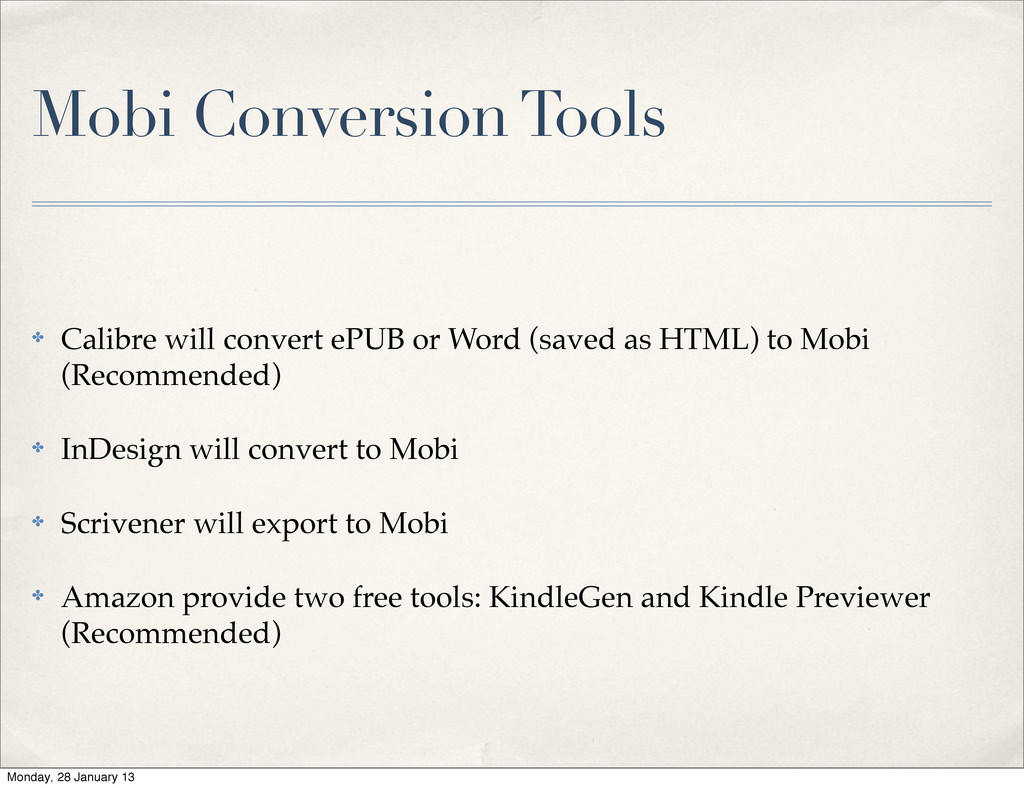
Email; Making better ebooks from InDesign is a consistent theme here at EPUB Secrets. This is a guest post from Felipe Santos, a noted Adobe educator from Brazil, with many excellent tips and tricks for you to bring to your workflow. Kindle Plugin for Adobe InDesign® converts the InDesign source content to a single file which supports both KF8 and Mobi formats enabling publishers to create great-looking books that work on all Kindle devices and apps. Kindle Plugin for Adobe InDesign® (Beta) is officially supported by Amazon to convert files to the Kindle format. This InDesign tutorial shows how to leverage the Amazon Kindle Previewer to convert an edited EPUB to the MOBI format. This InDesign tutorial shows how to leverage the Amazon Kindle Previewer.
Indesign Mobile App Template
The General Settings Pane of InDesign’s EPUB Export
Let’s get started. Open up and InDesign file and Go to File > Export (or Command E from a mac).
Note: This describes the latest version of InDesign CC (as of April 23rd, 2014).
Version: EPUB 2 or EPUB 3?
This dropdown allows you to select the EPUB version for the file you are creating. EPUB 2 was the standard format for quite a while, while EPUB 3 has recently seen wide adoption with updated specs and advanced functionality.
So what version should you choose? Well, my default answer would be EPUB 3. At this point almost all of the major e-retailers support EPUB 3, and if you’re using InDesign you probably put the effort into designing the book and EPUB 3 will offer more in the way of design and formatting options.
The more complex answer is you should look into what formats are supported by whatever system you use (smashwords, a common self-publishing tool, for example, only supports EPUB 2). If worst comes to worst, you could always output both formats to submit to different retailers.

Setup
Cover
Indesign To Mobi
If your cover is already in the current InDesign file, make sure its the very first page and select “Rasterize First Page.” This will convert that page to a cover image to be used by the EPUB file.
If you have a cover in another InDesign file, first convert it to a JPEG file, then use “Choose Image…” Select the JPEG you created and Click OK. Once you’ve done that your image path will be put in the text field below the dropdown menu.
If you don’t have a cover, you might want to consider creating one and following one of the two options above. Otherwise, select “No Cover”
Navigation
We’ll discuss this in more detail in a later post, but for now here’s a really basic description of how both dropdown options work.
File Name
This will generate a TOC based on the file name. If your file were named “book” chapters would be named “book-1,” “book-2,” etc.
TOC Style
This option gives you full control over the TOC creation. To generate the TOC, you can go to Layout > Table of Contents… The TOC will then be generated from this setting.
Indesign Mobile App
Margin
This allows you to include margins on an EPUB page. You might be inclined to add the same margins that you have in the print file, but I’d encourage you to not do that. Most ereaders have built-in margins on pages, and this will just add to that margin. If you add too much margin to the left and right you might end up with an unreadable text column on some devices.
Unless you are really sure you want to add margins to your EPUB file, you should probably leave this as 0.
Content Order
For most basic books, you’ll only have one option (the other two will be grayed out): “Based on Page Layout.” If you have one of the other options (“Same as XML Structure” or “Same as Articles Panel”) you probably know what you’re doing with it and should specify either accordingly 🙂
Text Options
Indesign Mobile Template
Footnote Placement
End of Section
This will likely be the most common solution for most EPUB files. This will take all of the footnotes and append them to the end of the section.
After paragraph
This adds the footnote right after the paragraph referencing it. This leads to a rather bumpy reading experience, so use only with extreme caution.
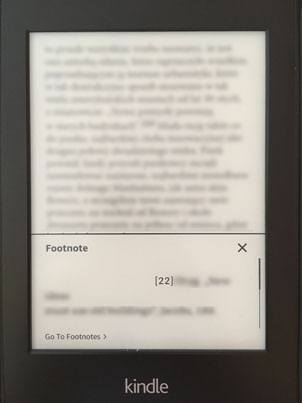
Inside a Pop-Up (EPUB 3)
(This option is only available if you specify EPUB 3 in the Version drop down.)
This is a great option if you know your file will be made available on the iBookstore as Apple has implemented the pop-ups as expected. Other readers may eventually adopt this standard, but only time will tell. If the reader does not support EPUB 3 pop-ups, it will default to a style much like the End of Section option.
Bullets
Map to Unordered Lists

This is what I would recommend to most EPUB creators. It converts your bullets to an <ul> element, which allows for semantic better semantics and CSS styling.
Convert to Text

It’s possible that if you have a complex and custom bullet style that this option maybe be better for you. If you think this is for you, it might be best to create an EPUB with it and check to be sure it converts correctly (and it may require some custom CSS if not).
Numbers
Similar to the Bullets options, except this will convert to numbers (ordered lists) rather than bullets (unordered lists).
Autodesk Mobile
View EPUB after Exporting
Indesign Mobile Layout
Checking this opens the EPUB file in your default desktop reader (assuming you have one installed).
And there you have it. In the coming weeks will dig into more


